



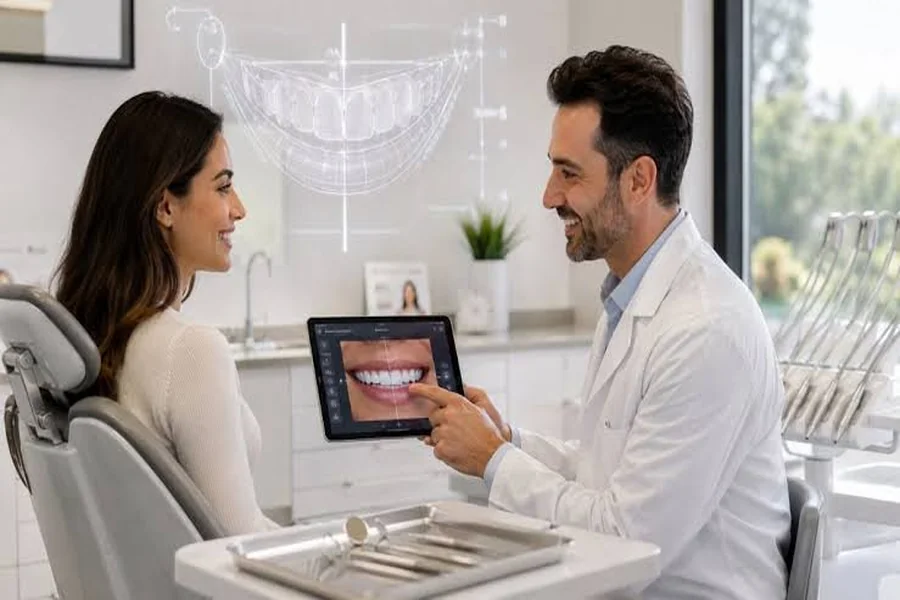
You catch your reflection before a meeting, or you see yourself smiling in a photo, and your eyes go straight to your teeth. Maybe it is a stain that never seems to lift, a chip you notice every time you talk, or spaces and uneven edges that make you hold back your smile. That kind of self-consciousness wears on you. A Southwest Charlotte dentist can help address those concerns so you feel more confident. It can change how you laugh, how you speak, and even how comfortable you feel in a room.
Not every concern means you need major dental work. Some issues are cosmetic, some point to wear or damage, and some sit in the gray area between appearance and oral health. A consultation with a general and cosmetic dentist can help sort that out. If you have been wondering whether your concerns are serious enough to bring up, these signs usually mean it is worth having the conversation.
Persistent Discoloration Often Means Over the Counter Fixes Are Not Enough
Teeth whitening strips and whitening toothpastes can help with mild surface stains, but they do not work well for every kind of discoloration. Coffee, tea, red wine, tobacco, aging, certain medications, and enamel changes can all affect tooth color in different ways. If you have tried store bought products and your teeth still look dull, yellow, gray, or uneven in color, that is one of the clearest signs you could benefit from a cosmetic dentistry consultation.
Staining is not always just cosmetic. In some cases, color changes can be tied to enamel wear, old dental work, or decay. MedlinePlus explains that tooth discoloration has several possible causes, which is why guessing at the fix often leads nowhere. You can review common causes of tooth discoloration there.
A dentist can tell you whether professional whitening is likely to help or whether bonding, veneers, or replacing older restorations would make more sense. That saves you from spending more money on products that were never going to solve the real issue.
Chips, Cracks, and Uneven Edges Can Affect More Than Your Appearance
A small chip can seem easy to ignore, especially if it does not hurt. The problem is that rough or damaged edges tend to become more noticeable over time, and they can also change how your teeth come together when you bite. You might start chewing on one side, avoiding certain foods, or feeling your tongue catch on the same spot all day.
Cosmetic concerns often overlap with function here. A chipped front tooth may be repaired with bonding or a veneer for appearance, but the consultation also helps determine whether there is deeper structural damage. Information from the National Institute of Dental and Craniofacial Research on oral health conditions and dental care can give you a broader sense of how dental issues connect to daily comfort and long term health.
If your smile looks worn down, flattened, or uneven, that can also point to grinding or bite issues. A cosmetic dentist is not just looking at the surface. They are looking at why the tooth changed in the first place and what treatment will hold up.
Gaps, Mild Crookedness, or an Uneven Smile Can Change How You Present Yourself
You do not need severe crowding to feel unhappy with alignment. Small gaps, rotated teeth, or one tooth that sits higher than the rest can draw your attention every time you look in the mirror. Other people may never mention it, but that does not mean it feels small to you.
This is where an aesthetic dental consultation can be useful. You can find out whether your goals are best served by clear aligners, bonding, contouring, or veneers. Sometimes the fix is simpler than people expect. Sometimes it is more involved, but at least you get a clear plan instead of years of second guessing.
Alignment concerns also matter because crowded or overlapping teeth can be harder to clean well. Research in the NCBI Bookshelf on oral health evaluation and management reflects how structure, function, and appearance often connect. What starts as a cosmetic frustration can affect maintenance and wear over time.
You Avoid Smiling in Photos or Cover Your Mouth When You Laugh
This sign gets dismissed too often because it sounds emotional, not clinical. It still matters. If you have changed your behavior because of your teeth, your concern is real. People do this all the time without fully noticing it. They smile with closed lips, tilt their head, talk less in group photos, or cover their mouth out of habit.
That kind of hesitation can build slowly. You adapt to it, then one day you realize you have been editing yourself for years. A smile makeover consultation is not about chasing perfection. It is about understanding your options and deciding whether a modest change could make you feel more at ease in your own skin.
| Concern | Common At Home Response | What a Professional Consultation Can Clarify |
|---|---|---|
| Stained or dark teeth | Whitening strips or toothpaste | Whether the stain is surface level, internal, age related, or tied to old dental work |
| Small chip or rough edge | Ignore it if there is no pain | Whether bonding, contouring, or a stronger restoration is needed |
| Mild gaps or uneven teeth | Live with it because it seems too minor for treatment | Whether aligners, bonding, veneers, or reshaping could help |
| Feeling embarrassed about your smile | Avoid photos or hide your teeth | Which changes would have the biggest impact with the least treatment |
Clear Next Steps Make Cosmetic Dental Decisions Easier
Take clear photos of your smile. Use natural light and get a few angles, including a full smile and a close view of the teeth that bother you most. This helps you spot patterns and gives you a better way to explain your concerns.
Write down what you want to change. Be specific. “Whiter teeth” is useful, but “the front right tooth looks darker than the others” is better. The more precise you are, the easier it is for a dentist to recommend options that fit your goals.
Schedule a consultation before trying another quick fix. If you are stuck in a cycle of whitening products, online advice, or putting it off, a professional opinion can save time and money. A good consultation should explain what is cosmetic, what is functional, and what can wait.
You do not need to feel guilty for caring about your smile. It affects how you show up in daily life, and that is reason enough to ask questions. If any of these signs sound familiar, meeting with a general and cosmetic dentist can give you clarity, realistic options, and a path that fits your comfort level.
