



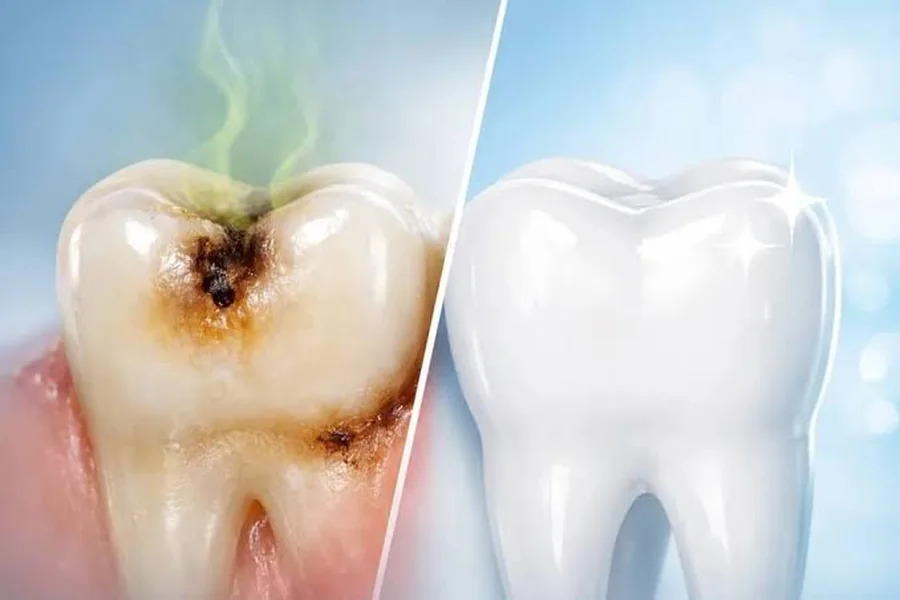
You notice it when you drink water, when you wake up, or right after you chew on one side. That odd, repeated bad taste around a crown or filling is easy to brush off at first. You might tell yourself food got stuck, your mouth is dry, or maybe it will pass in a day or two. When it keeps coming back, it starts to wear on you. It is annoying, distracting, and a little unsettling because you know your mouth is trying to tell you something, and it may be time to visit a dentist in Turlock.
A lingering foul taste near dental work often points to a real issue, not just a minor nuisance. Trapped bacteria, leakage under a restoration, gum irritation, decay, or a bite problem can all be behind it. Some causes are simple to fix when caught early. When ignored, they can turn into pain, infection, damage to the tooth, and a larger bill. Why repeated bad taste around a crown or filling should be evaluated comes down to one thing. A small symptom can be the first sign that the area is no longer sealed, clean, or healthy.
A bad taste around dental work often signals bacteria or breakdown
Crowns and fillings are meant to restore a tooth, but they do not make that tooth immune to future problems. A crown can loosen, a filling can crack, cement can wash out, and the edge where the restoration meets the tooth can collect plaque. When that happens, bacteria settle in and start producing odors and acids. You may not see anything in the mirror, but you can taste it.
That taste is often strongest after meals because food debris gets packed into a tiny space you cannot reach well with brushing alone. If the crown margin sits near the gumline, the tissue may also become inflamed. Swollen gums bleed more easily, trap more bacteria, and can create a metallic or sour taste. The National Institutes of Health explains that gum disease can begin with mild irritation and progress if not treated.
Decay under an old filling or crown can be even harder to spot on your own. The outer restoration may still look fine while the tooth underneath is weakening. A repeated bad taste can show up before severe pain does. That is why bad taste around a crown or filling should not be treated like a harmless quirk.
Ignoring the taste can lead to pain, infection, and replacement of the restoration
The trouble with this symptom is that it rarely stays frozen in place. A small leak under a crown can become recurrent decay. Mild gum irritation can turn into deeper pocketing around the tooth. If bacteria reach the nerve, you may end up needing root canal treatment or removal of the tooth. What started as an odd taste can become throbbing pain when you bite, swelling, or a bad odor other people notice too.
You may also be dealing with something mechanical. If the crown or filling is slightly high, it can put extra pressure on the tooth and create tiny openings over time. If the contact between teeth is too loose, food gets jammed there over and over. MedlinePlus lists common causes of bad breath, including poor oral hygiene, gum problems, and trapped food, all of which can become more likely around compromised dental work.
There is another layer to this. Not every unpleasant taste comes from the crown or filling itself. Dry mouth, sinus issues, medications, and taste disorders can change how your mouth feels day to day. The National Institute of Dental and Craniofacial Research notes that taste disorders can affect how you perceive flavors and odors. Still, when the bad taste is clearly linked to one restored tooth or one side of your mouth, a local dental problem moves much higher on the list.
Home care can help symptoms, but professional evaluation finds the cause
You can rinse, floss, brush carefully around the area, and even notice some short term improvement. That does not prove the problem is gone. Home care removes surface debris. It does not show whether the edge of a filling has opened, whether decay is hiding under a crown, or whether the gums around that tooth are infected.
| What You Notice | What It May Mean | What Home Care Can Do | What a General Dentist Can Check |
|---|---|---|---|
| Bad taste after eating near one crown | Food trapping or open margin | Remove some debris temporarily | Fit of crown, contact points, trapped decay |
| Metallic or sour taste with bleeding gums | Gum inflammation or early periodontal issue | Reduce plaque for a short time | Gum pockets, tissue health, cleaning needs |
| Bad taste with pain on biting | Cracked filling, loose crown, bite stress, infection | Little to no fix | Bite alignment, cracks, nerve involvement, X rays |
| Persistent odor even after brushing | Bacteria under restoration or deeper gum problem | Mask odor briefly | Leakage, decay, infection, restoration failure |
This is where repeated foul taste near a dental crown becomes more than a comfort issue. It becomes a clue. A general dentist can examine the margins of the restoration, take X rays if needed, test the bite, and look at the surrounding gum tissue. That kind of check is what tells you whether you need a simple cleaning, a bite adjustment, a new filling, crown repair, or treatment for infection.
Three steps you can take right away
Track the pattern. Notice when the taste shows up, whether it happens after meals, whether it is tied to one tooth, and whether you also have bleeding, swelling, pain, or a loose feeling in the crown or filling. Those details help narrow down the cause quickly.
Clean the area gently and thoroughly. Brush along the gumline, floss carefully around the tooth, and rinse with water after eating. Do not force floss if it shreds or snaps under the crown. That can be a sign the margin is rough or open, and your dentist needs to see it.
Schedule an exam before it escalates. If the bad taste has repeated for more than a few days or keeps returning in the same spot, book a visit with a general dentist. Early treatment is often simpler, less invasive, and less expensive than waiting until the tooth hurts.
Prompt evaluation protects both your tooth and your peace of mind
You are not overreacting by paying attention to a bad taste that keeps coming back around a crown or filling. Mouth symptoms are easy to minimize because they can come and go, but repeated changes usually have a cause. When you get the area checked, you give yourself the best chance of stopping a small problem before it turns into a larger one.
If a crown or filling has started to taste off again and again, do not wait for pain to force the issue. Arrange an appointment with a general dentist and get a clear answer about what is happening around that tooth.
