



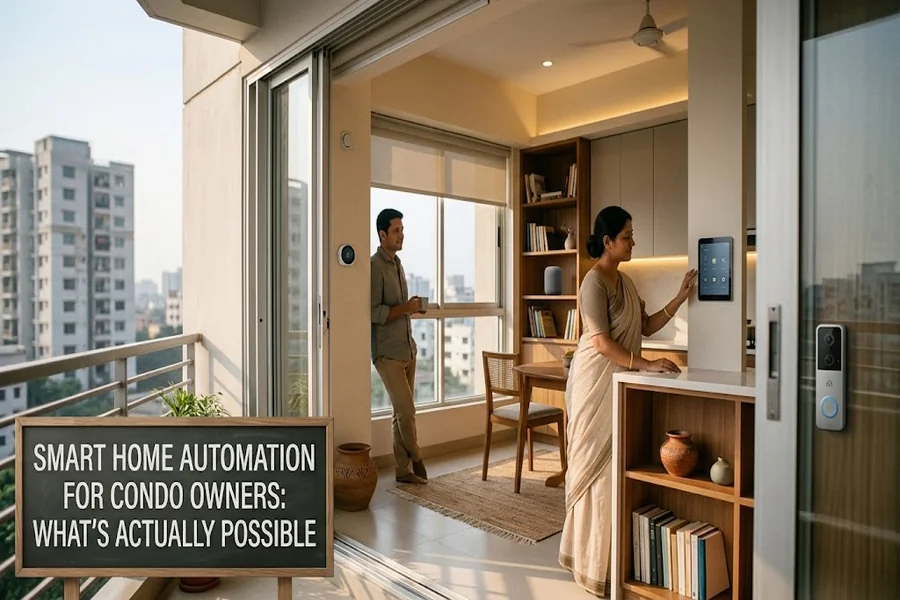
Whole-home automation is usually discussed in the context of single-family houses — running new wiring, cutting into walls, building out a full lighting and shading system. Condo owners are often left assuming automation isn’t really an option for them. That’s not quite true, but it does require working within a different set of constraints.
The Real Constraints of Condo Living
Condo renovations in Toronto come with restrictions that houses don’t: condo corporation rules about what can be altered, limits on running new wiring through shared walls or floors, and building-managed systems (HVAC, in many buildings) that a unit owner can’t modify directly. Any automation plan for a condo has to work around these realities rather than against them.
What’s Genuinely Achievable
- Lighting control — wireless dimming and switch-based systems that don’t require running new electrical through shared structure are typically condo-friendly, subject to corporation approval for any visible changes
- Motorized shades — one of the highest-impact upgrades for condos, particularly units with floor-to-ceiling windows and significant sun exposure
- Audio and video distribution — achievable within a single unit’s wiring, though multi-room audio is more limited by the unit’s existing electrical than in a house
- Security and access — smart locks and cameras at the unit’s own entry points, generally straightforward since they don’t involve shared infrastructure
- Unified control — a single app or panel tying together lighting, shades, and AV even without whole-building integration
What Usually Isn’t Possible
Condo owners typically can’t modify building-managed HVAC systems, run wiring through shared walls or ceilings without corporation approval, or make exterior changes (balcony lighting, for instance) without navigating building rules first. Any project needs to start with what the condo declaration and rules actually allow, not just what’s technically possible.
Working With What’s There
The most successful condo automation projects work within the unit’s existing electrical rather than fighting it — wireless lighting control instead of rewiring, shading systems that mount without structural changes, and equipment that fits discreetly into existing closets rather than requiring dedicated rack space. It’s a more constrained version of whole-home automation, but a genuinely functional one.
Getting Approval Right the First Time
Condo corporations vary widely in what they’ll approve without a fight. Getting a clear scope of work documented before submitting for approval — rather than a vague description — significantly speeds up the process and avoids the back-and-forth that derails a lot of condo projects.
The Takeaway
Condo living rules out some of what’s standard in a house-based automation project, but lighting, shading, security, and AV are all genuinely achievable within most buildings’ rules. Toronto’s condo market has enough demand for this that integrators, including SmartAV, now handle unit-specific projects regularly rather than treating them as an afterthought to house-based work.
